THE CONTENT OF EDUCATIONAL SERVICES AND THEIR IMPACT ON SKILLED LABOR MIGRATION: MECHANISMS AND STATISTICAL INDICATORS


In the context of globalization and a knowledge-based economy, educational services have transformed from a social institution into a strategic resource that directly determines the competitiveness of national economies and global flows of human capital. The content of these services–the quality of programs, their innovativeness, and their alignment with market demands–has become a key driver of migration processes among qualified specialists. This article analyzes the relationship between educational services and migration, presenting statistical data and models of interaction.
An educational service, defined as a complex of opportunities for acquiring knowledge and skills, fulfills the function of human capital formation. Its quality is a critical factor influencing the migration intentions of graduates. Countries with educational systems that lag behind global standards face powerful factors that encourage talented young people to leave. According to research, the gap between local and international education quality is directly correlated with the level of emigration sentiment among students.
The analysis reveals several key patterns:
1. Educational migration as a channel for subsequent labor migration. This is the dominant model, where studying abroad serves as a legitimate and efficient pathway to subsequent employment and integration. A foreign student, spending several years in a country, not only earns a degree but also undergoes socio-cultural adaptation, reducing transaction costs for a future employer. OECD statistics confirm that a significant proportion of international graduates remain in their host countries. For example, the retention rate reaches 45% in Canada and 25% in Germany (Project Atlas, 2022).
2. The impact of migration policy. Recognizing the value of international students as future high-skilled migrants, developed countries are actively adapting their legislation. In Germany, graduates are entitled to an 18-month residence permit to seek employment; in the UK, more than 35,000 graduates from the class of 2021 stayed to work under the Graduate Route (UK Home Office report, 2023). Canada’s Express Entry system awards additional points for local education, facilitating the acquisition of permanent residency.
The scale of educational migration is global. In 2021, the number of students studying abroad exceeded 6.4 million (UNESCO Institute for Statistics). The dynamics in key destination countries for the 2020-2024 period (see Table 1) illustrate both the aftermath of the COVID-19 pandemic and intensifying competition.
Number of International Students in Leading Destination Countries, 2020 – 2024
United States: 1 075 496 (2020), 914 095 (2021), 948 519 (2022), 1 057 188 (2023), 1 126 690 (2024).
Canada: 503 270 (2020), 256 455 (2021), 552 580 (2022), 660 230 (2023), 842 760 (2024).
United Kingdom: 551 495 (2020), 601 205 (2021), 633 910 (2022), 718 085 (2023), 758 855 (2024)
Australia: 463 643 (2020), 429 382 (2021), 363 859 (2022), 361 247 (2023), 437 485 (2024).
France: 358 000 (2020), 370 052 (2021), 364 756 (2022), 392 630 (2023), 412 100 (2024).
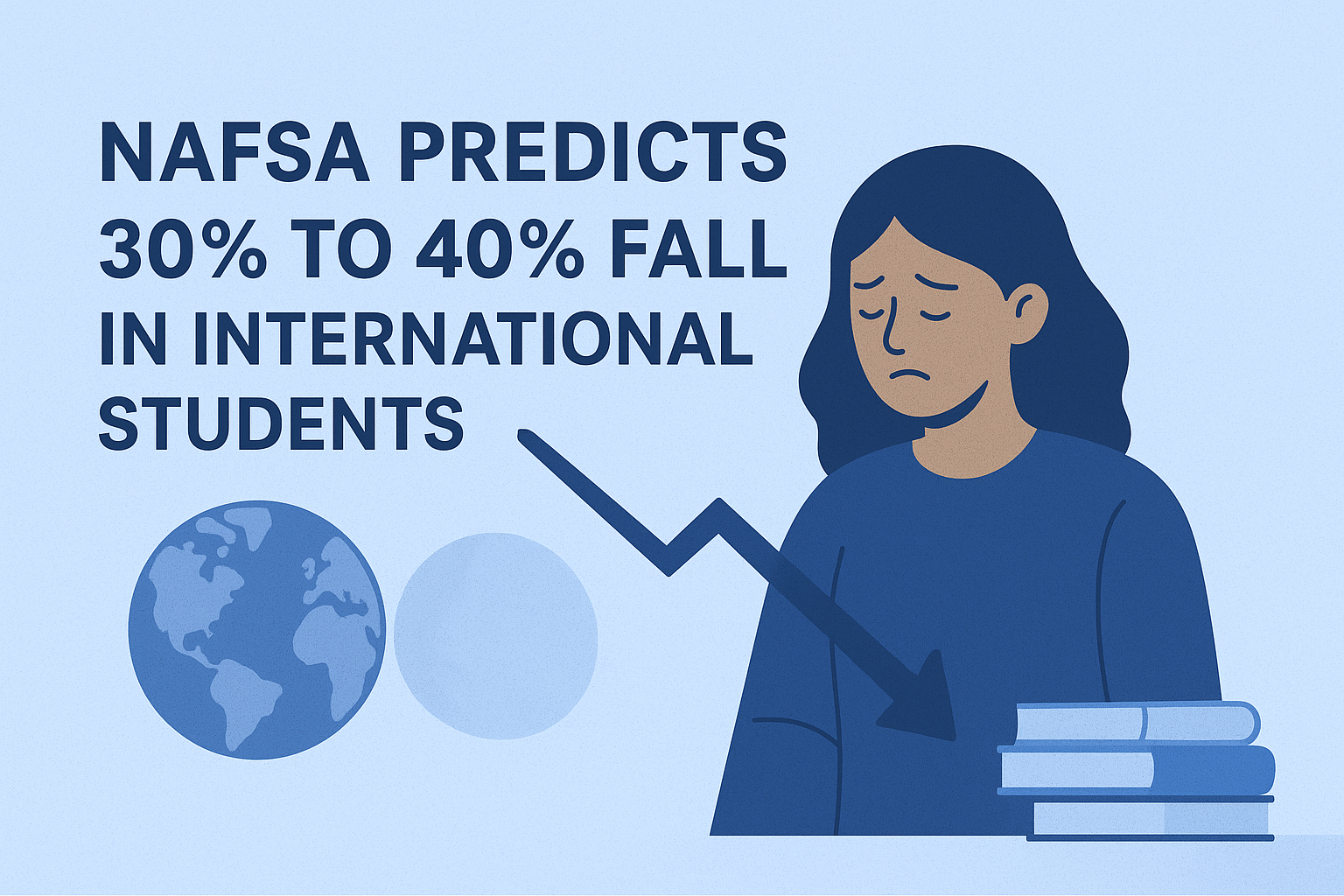
The most striking phenomenon is the dramatic surge in Canada (from 256,000 in 2021 to 842,000 in 2024), driven by a liberal immigration policy. The United States demonstrates a recovery to pre-pandemic levels (over 1.1 million in the 2024/25 academic year), confirming the enduring appeal of its system. The economic contribution of international students to the U.S. economy is estimated at $35 billion annually (NAFSA, 2022).
This process generates structural imbalances. For sending countries such as India and China, the combined annual outflow of students exceeds 800,000, while the rate of return is less than 55% (OECD, 2023). This leads to a loss of investment in school education and a weakening of scientific potential.
However, a new concept is emerging to mitigate the negative effect – “brain circulation” and “network gain.” Diaspora engagement programs (e.g., China’s “Thousand Talents Plan”) allow countries to benefit from the global mobility of their citizens through remote collaboration, investment, and knowledge transfer. Over 60% of China’s leading researchers in AI and biotechnology are returnees or maintain close ties with foreign centers (Chinese Academy of Sciences, 2022).
The digitalization of education has given rise to the phenomenon of “virtual migration,” enabling individuals to acquire knowledge and participate in global collaborations without physical relocation. This intensifies the competition for talent but also opens up new tools for sending countries to engage their diaspora. Educational migration is now complemented by hybrid formats (such as joint online programs), making global educational services more accessible.
Thus, in the modern world, educational services constitute a key regulator of global skilled labor flows. They establish universal qualification standards, create transnational social networks, and serve as a strategic instrument in inter-state competition for human capital. The success of national policy in this sphere is determined by the ability to create attractive educational ecosystems, effectively integrate international graduates (for receiving countries), and build mutually beneficial engagement with the global diaspora (for sending countries). Statistical data unequivocally confirms that investments in the quality and international integration of educational services are direct investments in a nation’s future economic and technological viability.
Prospects for further research are linked to an in-depth analysis of the impact of digital transformation on the structural imbalances of the global educational services market, as well as an assessment of the long-term efficacy of “brain circulation” policies amidst intensifying geopolitical competition and the fragmentation of the international scientific and educational space. Understanding these trends will form the basis for developing balanced strategies that minimize the risks of “brain drain” and maximize the benefits derived from participation in the global exchange of knowledge.